Understanding Canine Behavior Through Positive Reinforcement
- Dec 1, 2025
- 5 min read
Updated: Dec 3, 2025
Dogs are often referred to as man's best friend, and for good reason. Their loyalty, companionship, and playful nature make them beloved pets in households around the world. However, understanding canine behaviour can sometimes feel like a complex puzzle. One of the most effective ways to decode this behaviour is through positive reinforcement. This approach not only fosters a strong bond between you and your dog but also encourages desirable behaviours. In this blog post, we will explore the principles of positive reinforcement, its benefits, and practical strategies to implement it in your training routine.
What is Positive Reinforcement?
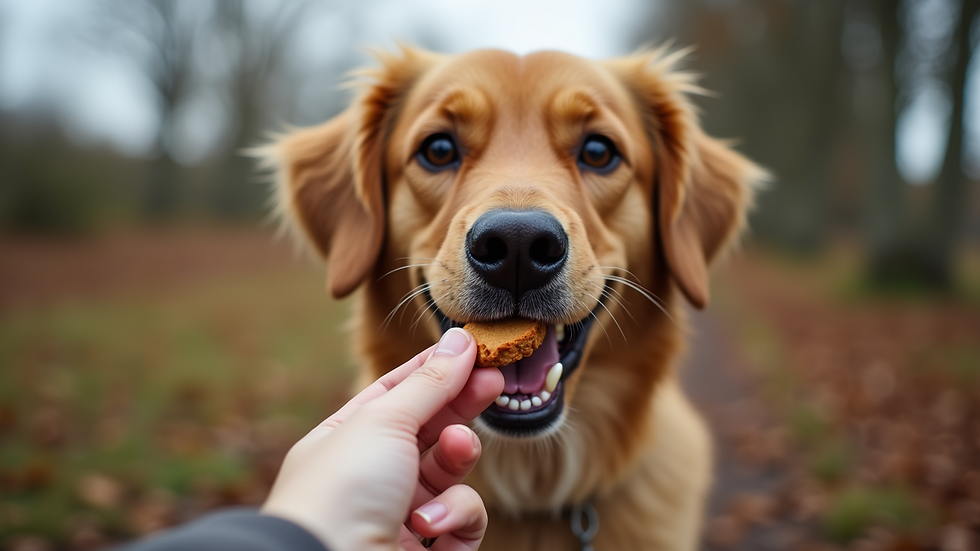
Positive reinforcement is a training method that involves rewarding a desired behaviour to increase the likelihood of that behaviour being repeated. This technique is based on the principles of operant conditioning, which was developed by psychologist B.F. Skinner. In simple terms, when a dog performs a behaviour that you want to encourage, you reward them with something they enjoy, such as treats, praise, or playtime.
Key Components of Positive Reinforcement
Timing: The reward must be given immediately after the desired behaviour. This helps the dog make the connection between their action and the reward.
Consistency: Be consistent in your rewards. If you reward a behaviour one day and ignore it the next, your dog may become confused.
Variety of Rewards: Different dogs respond to different rewards. Some may prefer treats, while others may be more motivated by toys or affection. Experiment to find what works best for your dog.
Benefits of Positive Reinforcement
Using positive reinforcement in training has numerous benefits for both dogs and their owners. Here are some of the most significant advantages:
Builds Trust and Strengthens Bond
When you reward your dog for good behaviour, you create a positive association with training. This builds trust and strengthens the bond between you and your pet. Your dog learns to see you as a source of rewards and positive experiences.
Encourages Learning
Dogs are more likely to learn and retain new behaviours when they are rewarded for them. Positive reinforcement makes training sessions enjoyable, which encourages dogs to engage and participate actively.
Reduces Fear and Anxiety
Traditional training methods that rely on punishment can lead to fear and anxiety in dogs. Positive reinforcement, on the other hand, creates a safe and supportive environment where dogs feel comfortable learning.
Promotes Good Behaviour
By consistently rewarding good behaviour, you can effectively shape your dog's actions. This means you can encourage behaviours like sitting, staying, and coming when called, while discouraging unwanted behaviours like jumping or barking.
Practical Strategies for Implementing Positive Reinforcement
Now that we understand the benefits of positive reinforcement, let's explore some practical strategies to implement this training method effectively.
Start with Basic Commands
Begin training your dog with basic commands such as "sit," "stay," and "come." These foundational commands are essential for good behaviour and can be taught using positive reinforcement.
Sit: Hold a treat close to your dog's nose and slowly move it upwards. As their head follows the treat, their bottom will lower to the ground. Once they sit, reward them with the treat and praise.
Stay: Ask your dog to sit, then open your palm in front of them and say "stay." Take a few steps back. If they remain in place, return and reward them. Gradually increase the distance and duration.
Come: Use a long leash or a safe, enclosed area. Call your dog’s name followed by "come." When they approach you, reward them with treats and praise.
Use High-Value Rewards
Identify what motivates your dog the most. High-value rewards, such as small pieces of chicken or cheese, can be more effective than regular treats, especially in distracting environments.
Incorporate Playtime
For some dogs, playtime can be a powerful reward. If your dog enjoys playing fetch or tug-of-war, use these activities as rewards for good behaviour. This not only reinforces the behaviour but also provides an outlet for their energy.
Gradually Fade the Rewards
As your dog becomes more proficient in a behaviour, you can gradually reduce the frequency of treats. Instead of rewarding every time, start rewarding intermittently. This keeps your dog engaged and eager to perform the behaviour.
Be Patient and Positive
Training takes time, and every dog learns at their own pace. Be patient and maintain a positive attitude. If your dog struggles with a command, go back to the basics and try again.
Common Misconceptions About Positive Reinforcement
Despite its effectiveness, there are several misconceptions about positive reinforcement that can hinder its implementation.
It Only Works for Easy Behaviours
Some people believe that positive reinforcement is only effective for simple commands. In reality, it can be used to teach complex behaviour as well. For example, you can train your dog to perform tricks, agility tasks, or even service dog skills using positive reinforcement.
It Makes Dogs Spoiled
Another misconception is that rewarding dogs will make them spoiled or overly dependent on treats. In fact, when done correctly, positive reinforcement teaches dogs to make good choices and encourages self-control.
It’s Only for Puppies
While puppies are often the focus of training discussions, positive reinforcement is beneficial for dogs of all ages. Adult dogs can learn new behaviour and improve their manners through this method.
Real-Life Examples of Positive Reinforcement in Action
To illustrate the effectiveness of positive reinforcement, let’s look at a few real-life examples.
Example 1: A Shy Rescue Dog
Luna, a rescue dog, was extremely shy and fearful of strangers. Her owner used positive reinforcement to help her build confidence. Whenever Luna approached a new person, her owner would reward her with treats and praise. Over time, Luna learned that meeting new people could lead to positive experiences, and her fear diminished significantly.
Example 2: A Dog with Jumping Issues
Max, a playful Labrador, had a habit of jumping on guests when they arrived. His owner decided to use positive reinforcement to curb this behaviour. Instead of scolding Max, they rewarded him for sitting calmly when guests entered the home. Gradually, Max learned that sitting was the way to greet people, and his jumping behaviour decreased.
Example 3: Teaching Tricks
Bella, a clever Border Collie, loved to learn new tricks. Her owner used positive reinforcement to teach her to roll over, play dead, and even fetch specific items. Each time Bella successfully performed a trick, she received a treat and lots of praise, making training sessions fun and engaging.
Conclusion
Understanding canine behaviour through positive reinforcement is not only effective but also fosters a loving and trusting relationship between you and your dog. By using rewards to encourage good behaviour, you can create a happy and well-adjusted pet. Remember to be patient, consistent, and creative in your training approach. As you implement these strategies, you will likely see improvements in your dog's behaviour and a stronger bond between you both.
So, grab some treats, get ready to train, and enjoy the journey of understanding your furry friend better!

